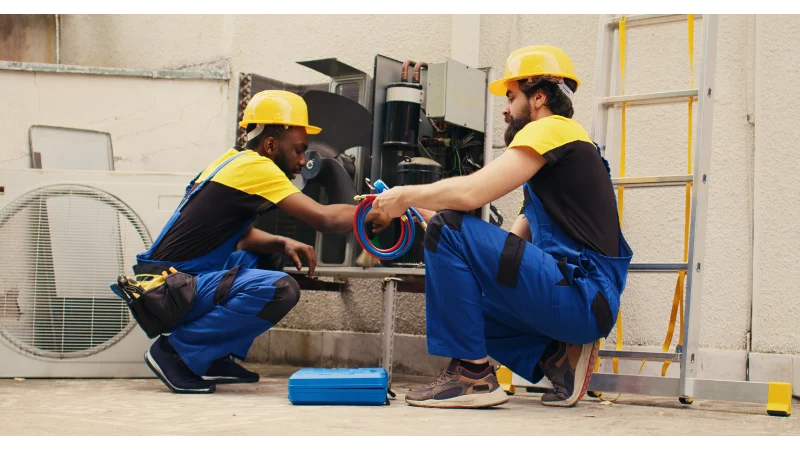
Heating and cooling systems are designed to support comfort, efficiency, and indoor stability for many years, but their long-term performance begins with how they are installed. Even advanced equipment can struggle if installation steps are rushed or poorly coordinated. HVAC contractors play a central role during this stage, translating system specifications into real-world operation. Proper installation influences airflow balance, energy use, system response, and overall reliability from the first day of use. When installation is approached with care and planning, systems are more likely to perform consistently under changing seasonal demands. Understanding how contractors approach proper installation helps building owners appreciate why this phase matters as much as ongoing maintenance.
How Installation Shapes System Performance
-
Planning and Load Assessment Before Installation
Before any HVAC system is installed, careful planning and load assessment are essential. Contractors evaluate building size, layout, insulation levels, and usage patterns to determine system requirements. Without this assessment, equipment may be oversized or undersized, leading to inefficient operation and uneven comfort. Proper planning ensures that heating and cooling output aligns with actual demand rather than assumptions. Contractors also consider window placement, ceiling height, and occupancy patterns to understand how air should move throughout the space. These factors influence equipment selection and installation configuration. When planning is thorough, the installed system operates within its intended range, reducing unnecessary strain and improving consistency. This foundation supports smoother operation and sets expectations for long-term performance.
-
Correct Placement and Component Integration
System placement is another critical aspect of proper installation. HVAC contractors determine where indoor and outdoor components should be positioned to support airflow, accessibility, and environmental protection. Incorrect placement can expose equipment to excess heat, debris, or restricted ventilation, all of which reduce efficiency. During installation, contractors also integrate components such as ductwork, thermostats, and drainage lines to function as a unified system. Attention to these connections ensures that each part communicates effectively with the others. In some communities, projects handled by providers such as Semper Fi Heating and Cooling demonstrate how thoughtful placement and integration support smoother system operation. When components are aligned correctly, systems respond more accurately to temperature changes and maintain comfort more evenly.
-
Ductwork Design and Airflow Balance
Ductwork plays a significant role in how well an HVAC system performs after installation. Contractors design and install ductwork to distribute air evenly throughout a building. Poorly designed duct layouts can lead to pressure imbalances, noise, and inconsistent temperatures. Proper installation focuses on sealing connections, minimizing sharp turns, and ensuring adequate sizing to meet airflow requirements. Balanced airflow reduces the workload on system components by preventing resistance that would otherwise force equipment to work harder. Contractors also verify that supply and return paths are properly matched, ensuring smooth air circulation. This balance supports comfort while reducing wear on fans and motors, contributing to steady system behavior over time.
-
System Calibration and Initial Testing
After physical installation is complete, HVAC contractors perform calibration and testing to confirm system readiness. Calibration involves adjusting controls, airflow settings, and thermostat response to match building conditions. Initial testing verifies that heating and cooling cycles activate correctly and that safety features function as intended. Contractors observe system behavior under normal operation to identify any irregularities before handover. This step allows adjustments while installation teams are still on site, reducing the likelihood of early performance issues. Testing also helps contractors confirm that installation decisions align with design expectations. This careful transition from installation to operation supports confidence in system performance from the start.
-
Installation’s Impact on Long-Term Reliability
Proper installation influences not only immediate comfort but also long-term reliability. Systems installed with attention to detail experience fewer early failures and maintain efficiency more consistently. Contractors help protect equipment lifespan by ensuring that components are not exposed to unnecessary stress from misalignment or improper configuration. Over time, these early installation choices affect maintenance needs, repair frequency, and energy use patterns. When installation supports balanced operation, systems are better equipped to handle daily demands without accelerated wear. This long-term perspective reinforces why installation quality is a critical investment rather than a one-time task.
HVAC contractors shape system performance long before routine maintenance begins. Through planning, placement, airflow design, calibration, and testing, proper installation establishes a stable foundation for comfort and efficiency. Each decision made during installation affects how the system performs in daily use and under environmental changes. When installation is handled with care, systems operate more smoothly and predictably over time. For building owners, this approach reduces uncertainty and supports confidence in their heating and cooling infrastructure. Proper system installation is not simply a starting step; it is a lasting influence on how HVAC systems perform throughout their service life.